

In this guide we look at how to plant against a wall or fence, and we suggest a few choice plants that work well in this situation.
The steps for planting in front of a wall or fence with a view to training the plants up and out across the fence or wall are:
– Water the plants to be used an hour before planting and allow them to drain.
– Attach vine eyes to the fence behind where you are planting. These will be useful for the plant to cling to as it grows bigger.
– If using arches or an obelisk, dig over the area first rather than digging around the uprights later.
– Dig a hole for the plants about 45 cm / 18 in from the fence wall so it’s not in the rain shadow. Make sure the hole is deep enough to cover the roots.
– Attach the supports first. Plants grown against a wall need supports, such as bamboo garden canes to support their early growth. Arrange the supports in a fan shape, leaning into the wall or fence.
– Lean the plants against the canes ensuring that they’re level with the compost, backfill the hole with a trowel, and level the soil with your hand. For Clematis, make sure it’s 10 cm / 4 in below the surface level.
– Untie the plant from its original cane (that was in the pot with it), fan out the stems, and tie them to the support canes in a loose figure of eight using soft twine. Tying just above the cane’s joints can stop the twine from slipping down.
– Fluff up the soil and draw it in a circular ridge around the plant’s base to create a saucer-like depression. Drench the soil with water. Some will collect in the depression and drain down to the plant’s roots.
– Apply a mulch around the base of the plant but without allowing it to touch the stems. When the plants grow up to the wires, train the outer stems along the lower wires horizontally, and the central stems up and along the upper wires.
Some plants that grow well against a fence or wall include:
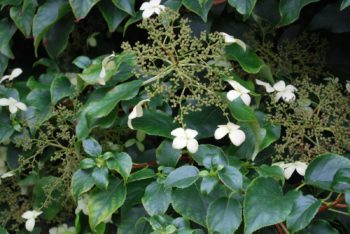
Hydrangea Petiolaris / climbing hydrangea is a climbing, deciduous shrub with oval shaped, broad, mid green leaves which turn golden yellow in autumn. In May and June the Hydrangea Petiolaris bears wide flower heads with small fertile flowers which are randomly surrounded with lovely white petaled flowers.
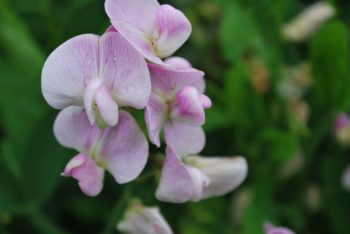
Lathyrus Latifolius ‘Pink Pearl’, commonly known as everlasting pea is a climbing, herbaceous perennial which has winged stems and leaves of a grey/green colouring. In the months of June to September the Lathyrus Latifolius ‘Pink Pearl’ blooms lovely, showy pink and white flower racemes which are truly beautiful.
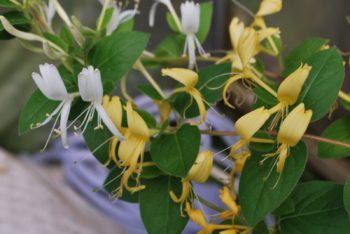
Lonicera Japonica Halliana, commonly known as Hall’s Japanese Honeysuckle is an evergreen, climber plant. With leaves oval shaped and dark green in colour, and in the months of April all the way through until August the Lonicera Japonica Halliana has long white flowers, turning a wonderful yellow colour shortly after, giving these a two tone appearance and known to be highly fragrant.
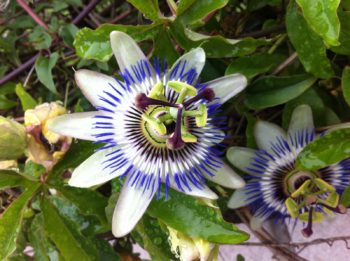
Passiflora Caerulea commonly known as Blue Passion Flower is a beautiful semi-evergreen climber which creates a stunning display with fast growth habit. The leaves are dark green, 5 lobes with twining tendrils. In July and September the Passiflora Caerulea will bloom the true stars of the show, stunning white flowers with blue and purple filaments, often producing shortly after these plum like orange fruits.