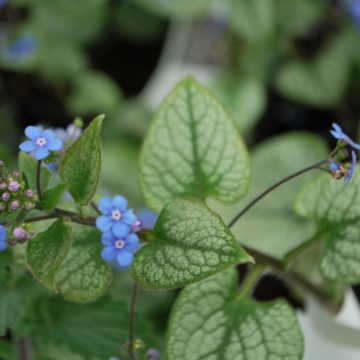
Eurybia x Herveyi, also known as ‘Aster Twilight’, is a lavender blue coloured daisy with a bright yellow centre. Attractive to bees, butterflies, moths and other pollinators makes it ideal for growing within borders and also gives a welcome flash of colour when others start to fade.
Eurybia Herveyi, also known as ‘Hervey’s Aster’, is a perennial herbaceous plant that is native to Eastern North America. The plant belongs to the Aster family, and is known for its beautiful green leaves and clusters of lavender blue flowers that bloom in late Summer and August. The plant can reach up to 1 metre tall and wide and has a thick, woody stem.
This variety is a hardy plant that can grow in a variety of soil types, but it prefers fertile, well-drained soil and can tolerate full sun or partial shade.
In terms of history, this Eurybia was first described by the American botanist Jonathan Dickinson in 1817. It was used traditionally by Native American tribes for medicinal purposes.
Eurybia Herveyi is a popular garden plant known for its unique and striking appearance, making it a great option for borders, wildflower gardens, or as ground cover. Its compact size makes it a great option for small gardens or mixed containers, and it can also be used as a border edging. This plant is a great option for those who are looking for a hardy and long-lasting plant with a unique and exotic look.
How to care for your Eurybia x Herveyi
- Light: Prefers full sun, but it can tolerate partial shade. It will grow best in a location that receives at least 6 hours of direct sunlight per day.
- Soil: The plant can grow in a variety of soil types, but it prefers well-drained, moist soil. It can tolerate a wide range of soil pH levels, but it prefers a slightly acidic to neutral soil.
- Watering: The plant prefers consistently moist soil, but it can tolerate drought conditions. Water it regularly to keep the soil consistently moist. Avoid over watering, which can lead to root rot.
- Fertiliser: The plant doesn’t require regular fertilisation. If you want to give it a boost, you can fertilise it once a month with a balanced, water-soluble fertiliser.
- Pruning: Prune the plant back in late Winter or early Spring before new growth appears. This will promote bushier growth and remove any damaged or diseased stems.