

Bamboos are versatile perennials with woody, tough canes that can range in height from the smallest at around 10-15cm tall to varieties that can grow as high as the house!
Bamboo plants may lack fruit or flowers, but this is more than compensated for by their swaying stems and relaxing rustle in the breeze. Also, the colours and shapes of the canes and leaves give them their own aesthetic beauty, and great versatility.
Where To Plant Bamboos
Bamboos vary in size, hardiness, appearance, and how rapidly and widely they spread. This makes the question of where to plant them more dependent on the individual garden. Broadly speaking though, bamboos spread less in areas that are moist.
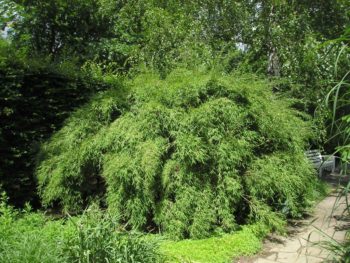
Uses For Bamboo
Bamboo plants are popularly used as:
- Screens and backdrops. Using several plants of one species in a row or geometric shape together, for example, can create a modern-looking screen.
- Ornamental, focal points and garden effects.
Growing Bamboo In Containers or Pots
Growing bamboos in containers, however, is a good way to contain their spread, and gives you the flexibility to move them around your garden as required. Containers or pots for smaller bamboos should be at least 40cm / 16in in diameter, and for larger plants the containers / pots should be at least 90cm / 36in diameter.
Containing Bamboo Plants / Controlling The Spread of Bamboo
If you’d prefer to plant your bamboo in soil, constructing a simple barrier around the roots is another useful way to control their spread. This can be achieved, for example, by using overlapping slates, non-perishable plastic, or steel, buried vertically in the ground at a depth of at least 40 cm / 16 inches. 8 to 10cm / 3-4 inches should be left protruding above the surface to stop any roots from breaking out. It may also be helpful to dig around the container/clump annually to slice-off any roots that are escaping.
How To Cut Your Bamboo Back
Bamboos like to spread out by running their roots / rhizomes out into the surrounding soil. Cutting back that root spread is, therefore, an important part of managing your bamboo plants. To do this, use a spade (or secateurs) to slice downwards around the outside of the bamboo clump to cut off the stray rhizomes. Next, use a fork and/or your hands to remove the cut-off pieces of rhizome. These pieces can either be disposed of or used to grow more plants.
Bamboo at Emerald Plants
Shop online for bamboo plants here.